What Is Sewage Water . Sewage is actually the wastewater that is released from houses, hospitals, industries, offices and other sources. Blackwater, or wastewater from toilets, and graywater, which is wastewater from all domestic sources except toilets. Wastewater Treatment Essential Guide Aquatech from www.aquatechtrade.com When sewage enters a sewage treatment. Sewage contains organic wastes as well as chemicals. Sewage contains many of the elements present in wastewater, plus human waste.
Separating Salt From Water. A process for obtaining available elements from seawater is described, which process includes two separation steps. Place the pot on the fire source and light it up.
What are some ways of separating salt from water? Quora from www.quora.com
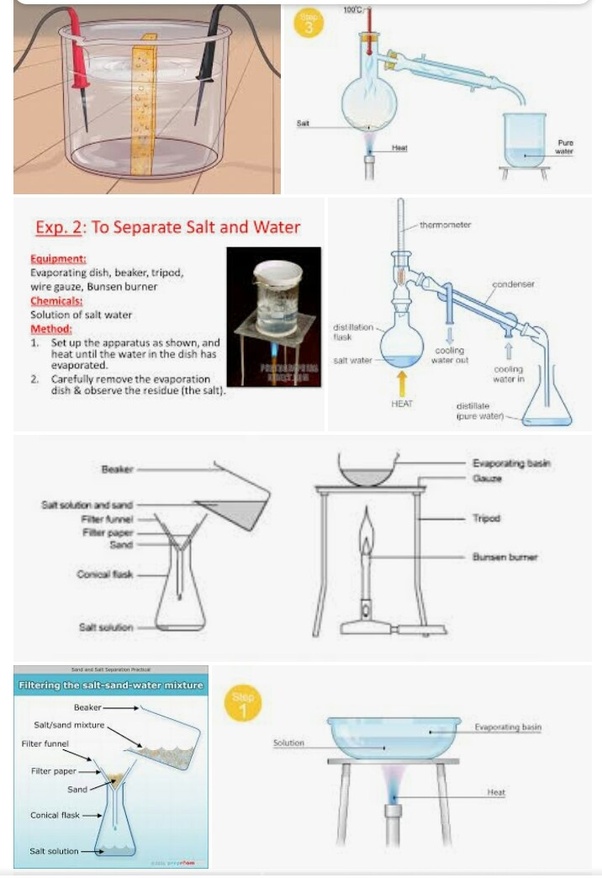
Keep stirring for about 1 minute and then leave the beaker to cool. Stir the mixture gently for a few minutes. Allow the water to get to the boiling point, and then allow it to simmer.
As The Water Evaporates, The Salt Will Remain Behind.
Although this water obtained is undrinkable since there is a high content of bacteria and algae in seawater, it can be used for a variety of other purposes. Heat gently, while stirring the mixture with the glass rod. You should have enough room for the water to expand as it boils.
Pour The Clear Liquid Into The 100 Cm 3 Beaker, Leaving The Solids Behind.
You can speed up the process by raising the temperature or by blowing dry air over the surface of the liquid. How to separate salt from water while we were learning about evaporation, we found some experiment ideas about separating salt from water. Allow to cool and for any solids to settle.
The Distillation Process Involves Two Changes Of Physical State;
Place the water in a large pot and bring it to a boil. When salt is added to the mixture, the salt wants to dissolve in the water and competes with the alcohol for the water molecules. The method may include (1) adding a solvent to a solution of salt in liquid to form an aqueous mixture, wherein the mass ratio of the solvent to the total volume of aqueous mixture is about 0.05 to 0.3;
“It’s Not… I’m Not Using Fresh Water.
(2) separating a salt slurry from the aqueous mixture; Heat and boil the seawater. Continue boiling the water until most of the water has evaporated and you’re left with a thick paste.
Reverse Osmosis And Distillation Are The Most Common Ways To Desalinate Water.
Ensure that the surrounding water does not get into the small pot. Reverse osmosis water treatment pushes water through small filters leaving salt behind. Place the beaker on the tripod and gauze.


Comments
Post a Comment